
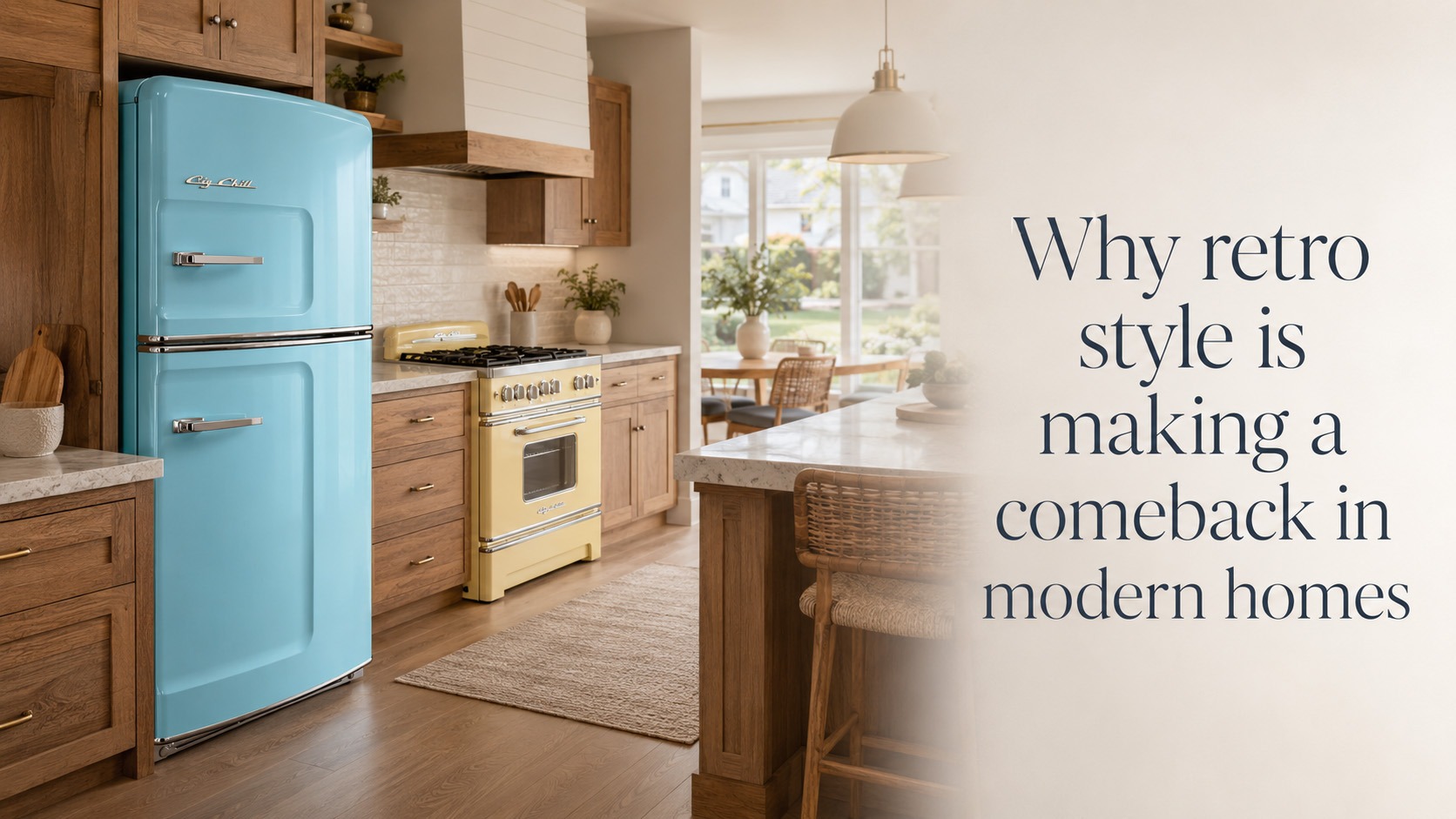
Why retro style is making a comeback in modern homes
Retro kitchen design is growing in popularity.
For much of the past two decades, residential design moved steadily toward cleaner lines, neutral colors, and fewer decorative details. Kitchens filled with black-and-white appliances, or “upscaled” to stainless steel. Living rooms became studies in white, beige, and gray. Appliances were expected to blend into the background or disappear behind cabinetry.
The result was neat, orderly kitchens. None of them is remarkable. Most looked like all the others. Style was directly out of Home Depot and Lowe’s. Not bad. But not imaginative.
Homeowners are in revolt against the boring trends. Many are injecting color, pattern, natural materials, vintage furnishings, and historically influenced designs into their homes. Retro is in. Everything from refrigerators and ranges to lighting and tile is getting an old-school makeover.
The appeal extends across all manner of architectural styles, from cabins and rustic houses to modern industrial lofts. Retro-inspired design fits everywhere.
Going retro does not mean recreating a room from 1955. Most want something more balanced. We all want the warmth and personality of an earlier period, but combined with the comfort, efficiency, and function expected today.
Retro kitchen design creates an emotional connection
Homes evoke emotions.Whether it’s the house you grew up in or a charming Airbnb you stayed in on holiday, few things create a more lasting memory and emotional impact than a home.
It isn’t the layout of a home that we remember. It’s not the resale value. It’s often not something tangible. Homes have a feel. And that comes from an array of factors. But no one ever said, “You know what I liked about that house? It was BORING. It was exactly like every other house.”
Boring isn’t memorable.
Retro is memorable. In part, this is because the design is just that much more interesting. But it’s also that retro designs remind us of past times. A rounded refrigerator, a substantial stove handle, a rotary control, patterned wall covering, or a familiar paint color can evoke fine memories from years ago. A family kitchen. A grandparent’s house. A childhood vacation. The memory may not be tied to the exact object. The shape, finish, or color is often enough to create the association.
That emotional response helps explain why retro styling is making a comeback.
Designers interviewed by Homes & Gardens described retro appliances as a source of warmth and nostalgia in the kitchen. The publication also noted that their role has changed. Rather than furnishing an entire room in one period style, homeowners increasingly use a retro appliance as a carefully selected focal point.
This distinction matters. A home can acknowledge the past without becoming a museum or a themed set.
A cream-colored range may suggest an earlier period while still fitting comfortably in a new kitchen. A red refrigerator can recall the 1950s without requiring checkerboard floors and diner furniture. A classic appliance can complement a century-old house without pretending to be original to it.
Retro kitchen design works because it creates familiarity without requiring strict historical accuracy.
Homeowners want rooms with more character
While stainless steel remains a practical and appropriate choice for many kitchens, it is decidedly cool, even antiseptic. If not stainless, then it’s white or black steel. The problem is not the material itself. The problem is large, featureless metal squares repeated throughout a kitchen.
When the same appliance finishes, cabinet styles, countertops, and color schemes appear in house after house, the rooms begin to lose their individual identity. What once looked modern starts to feel standardized.
No one wants to live in a standard home.
Current research points toward a growing interest in more personal interiors. Houzz reported increased interest in
- bold colors
- patterned surfaces
- layered textrues
- painted architectural details
These choices indicate a trend among homeowners to decorate for themselves rather than for future buyers. Retro furnishings and appliances support that shift by attracting attention through both form and color.
A vintage-inspired refrigerator has curved doors, pronounced handles, and visible trim. A retro range uses knobs, grates, and substantial hardware as design elements. These parts do not try to disappear. They become part of the room’s composition.
The same principle applies elsewhere in the house. A midcentury chair, an old wooden cabinet, or an Art Deco mirror can break up a room filled with new furniture. The older reference adds depth and prevents every element from appearing to have arrived on the same delivery truck.
Retro does not have to mean genuinely old
A true vintage appliance was manufactured decades ago. It may have considerable visual appeal, but ownership can involve difficult repairs, scarce parts, limited storage, outdated wiring, and higher energy use.
A retro appliance is new equipment designed with references to an earlier period. It offers the appearance of an older refrigerator or range while incorporating modern technology.
Houzz makes this distinction clearly: vintage appliances are original products from an earlier era, while retro appliances are newly manufactured products designed to recall them.
Homeowners do not have to choose between style and function.
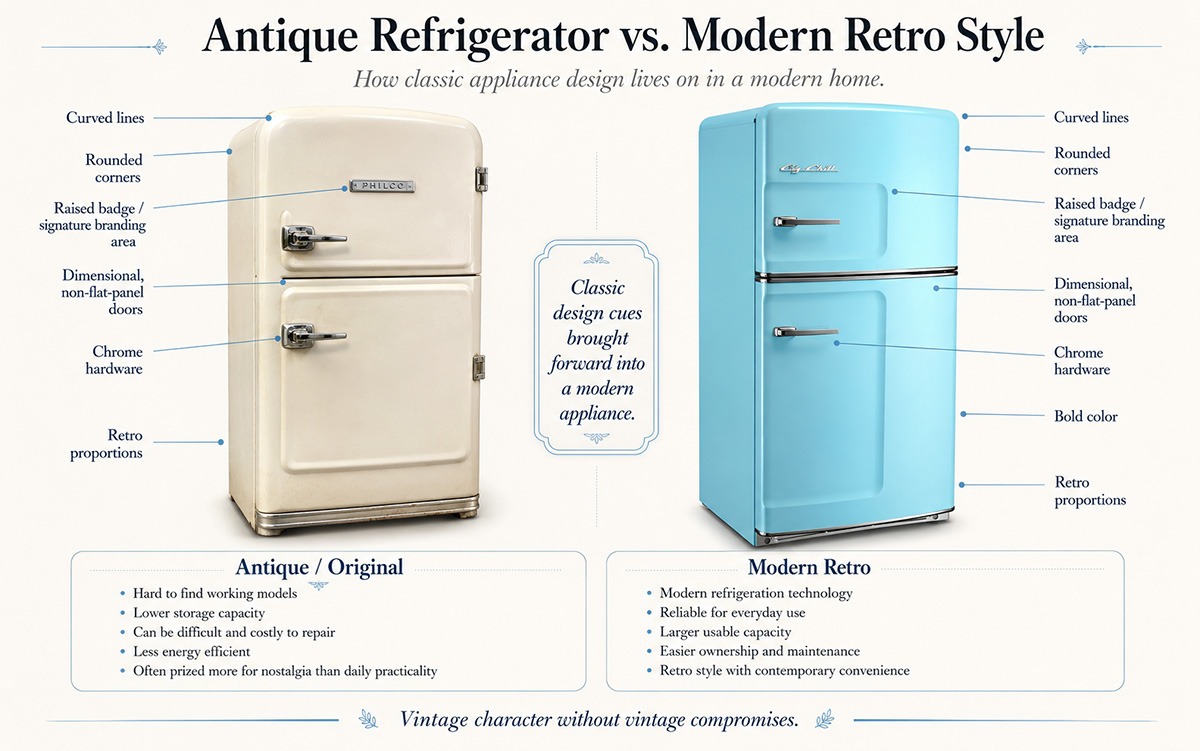
The same rounded, stamped-metal doors can be had without the 70-year-old cooling system. Elegant, prominent knobs control turn up the heat on a much more efficient, modern cooking range. The result is not a reproduction kitchen but a modern one that borrows the visual language of the past.
Retro kitchen design softens modern interiors
Contemporary homes can be stark. They rely on flat surfaces, straight lines, glass, stone, and steel. It appears clean and sophisticated, but too often it comes off as cold and impersonal.
Retro pieces introduce curves, color, texture, and visual weight.
Contrast makes a difference. Steering away from the “everything has to match” mindset creates a vibrant and welcoming environment. A rounded refrigerator can soften a wall of flat-panel cabinets. A classic range can create a substantial focal point beneath a simple plaster hood. A wooden dining table can counterbalance polished stone and metal.
The appliance does not need to match the architecture literally. It works simply because it does not match.
The right statement piece instantly adds shape and personality to a room. A bold red refrigerator against white cabinetry makes an obvious statement. A cream, sage, or muted blue appliance produces a quieter contrast.
The big picture sets the stage. Against rustic wood, it may feel familiar and comfortable. Against concrete and glass, the same appliance may appear sculptural and unexpected.
Color has returned to the kitchen
The all-white kitchen dominated residential design for years. Gray followed as the default neutral in many homes. Both remain widely used, but homeowners and designers are once again experimenting with stronger colors, warmer woods, patterned tile, and mixed finishes.
Houzz’s 2026 kitchen research found that wood had overtaken white as the most commonly selected cabinet color among renovating homeowners. Medium and light wood tones led the category, indicating increased interest in warmth and natural character.
Color does not always have to be bright.
Good Housekeeping reported renewed interest in off-white and cream appliances, partly because these softer finishes complement deeper wood tones and stronger cabinet colors. They provide the warmth of a vintage reference without demanding all the attention in the room.
Big Chill currently offers its Retro and Classic appliance collections in more than 200 color options, allowing the finish to respond to the home rather than forcing the home to conform to a limited palette of appliances.
Retro style works in more homes than people expect
Retro design is sometimes treated as a narrow category, but its effect varies depending on the home it’s in. Let’s look at retro appliances in some typical American home styles.
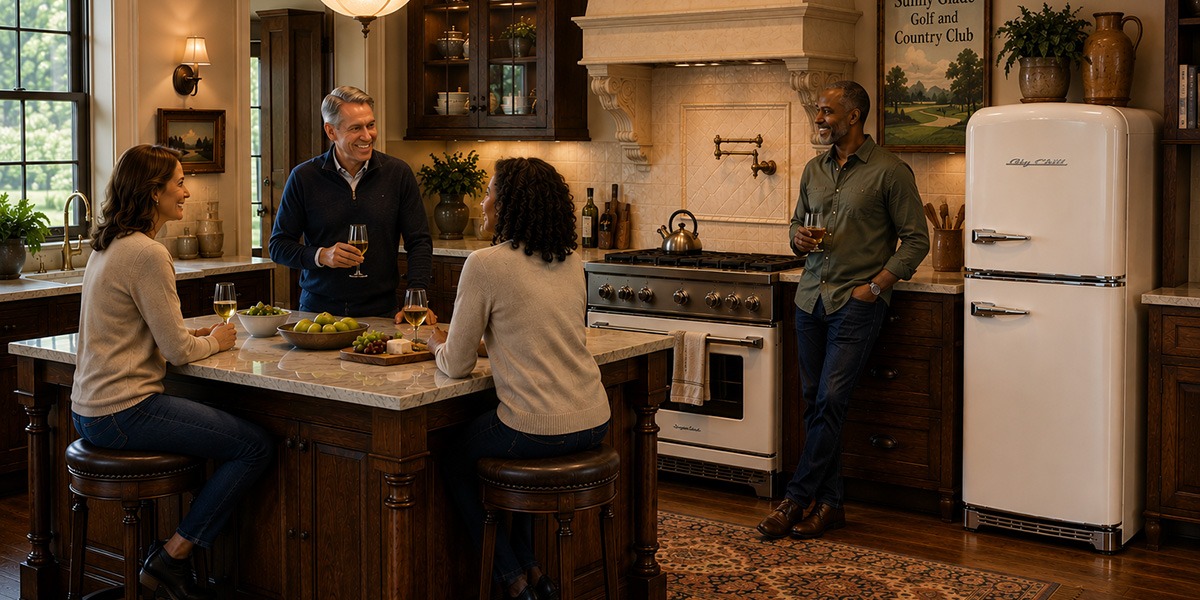
In a traditional home
Retro appliances can complement detailed cabinetry, wood floors, moldings, and established architectural features. Cream, black, burgundy, green, and muted blue often work well without making the kitchen feel tied to a single decade.
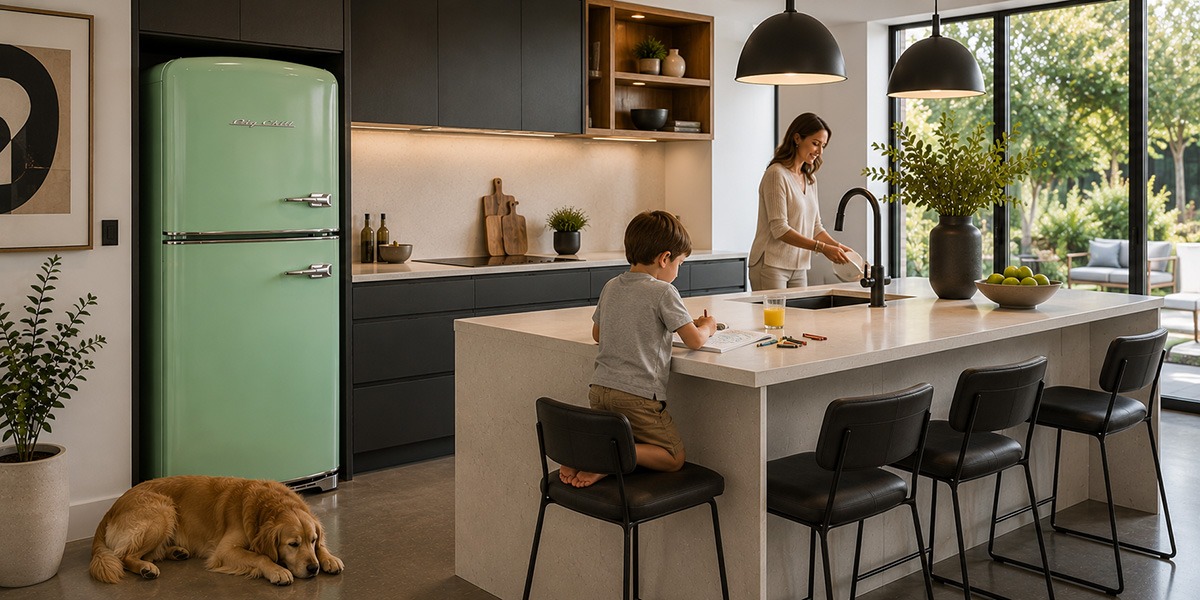
In a modern home
A curved refrigerator or substantial range can provide contrast against flat cabinets and minimalist surfaces. One appliance may supply all the color and visual interest the room needs.
In a farmhouse
Vintage-inspired forms fit naturally with painted cabinets, wood counters, apron-front sinks, open shelving, and furniture-style islands. The appliance can reinforce the style without relying on decorative signs or artificially distressed finishes.
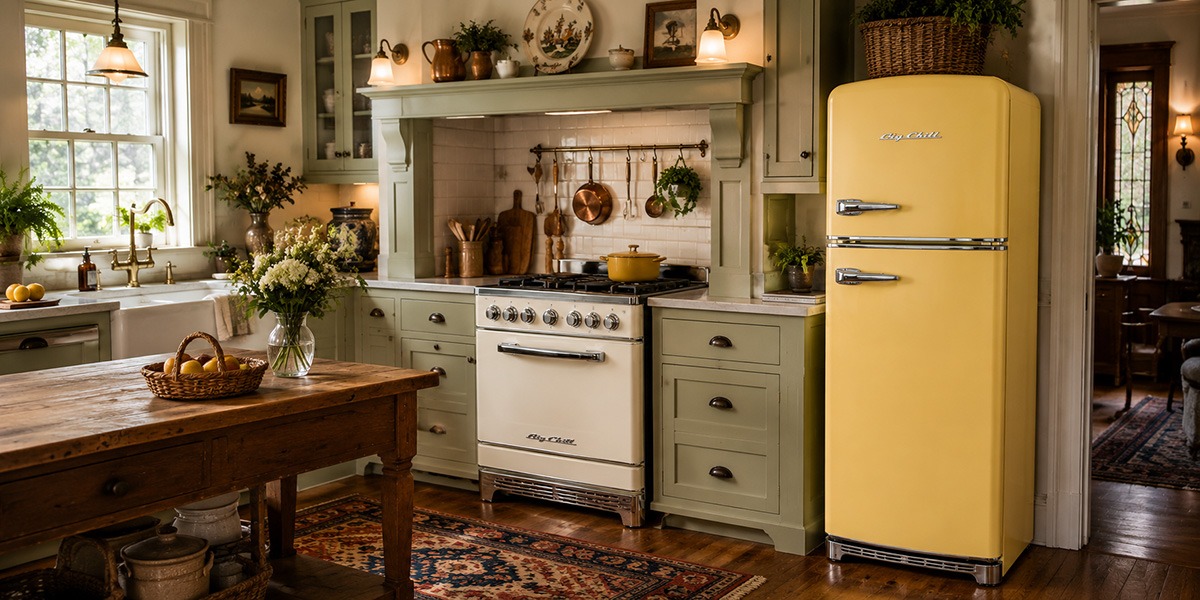
In a farmhouse
Vintage-inspired forms fit naturally with painted cabinets, wood counters, apron-front sinks, open shelving, and furniture-style islands. The appliance can reinforce the style without relying on decorative signs or artificially distressed finishes.
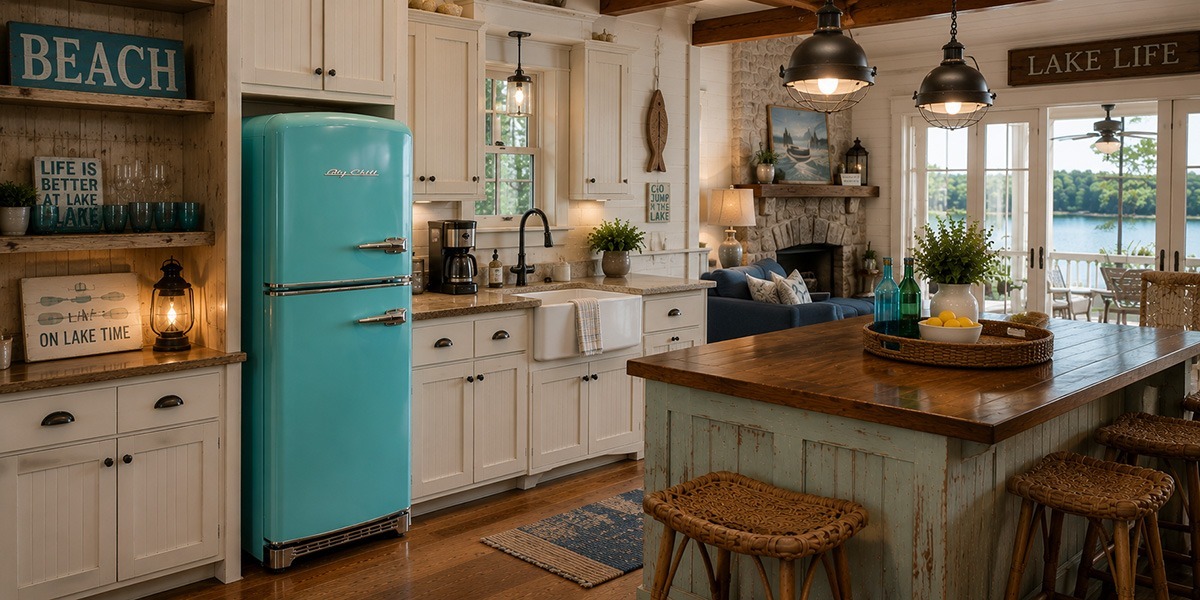
In a coastal home
Soft blues, greens, creams, and whites support a relaxed setting. Brighter colors can make a vacation home, pool house, or guest cottage feel less formal.
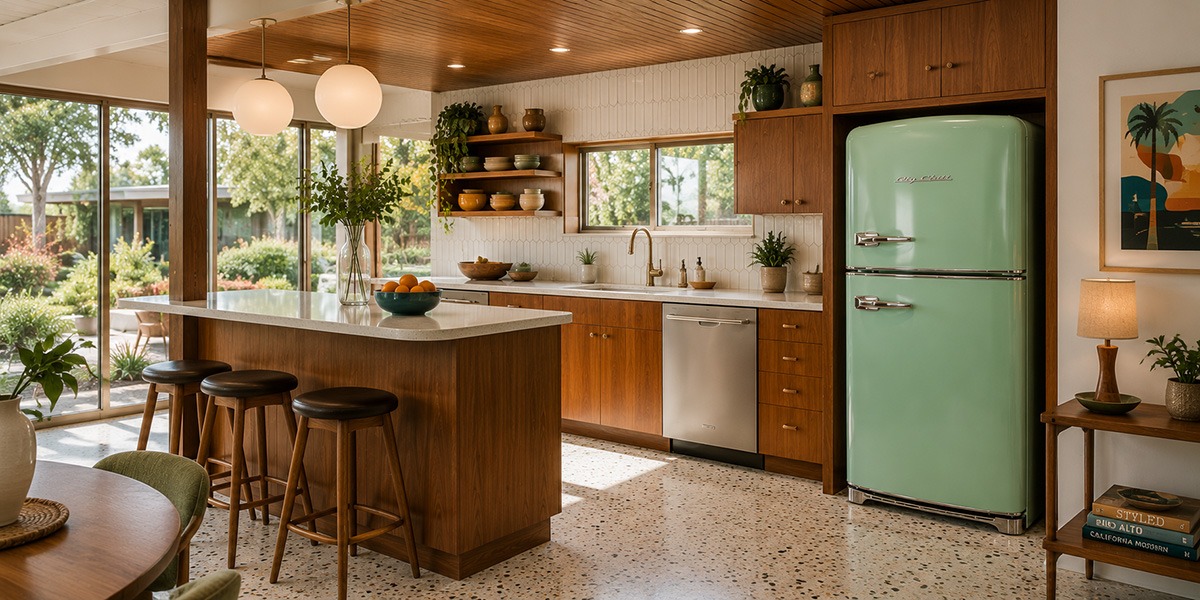
In a midcentury home
Retro appliances relate directly to the architecture, but the homeowner can decide how far to carry the reference. Bold period colors create a stronger historical connection, while subdued finishes keep the effect restrained.
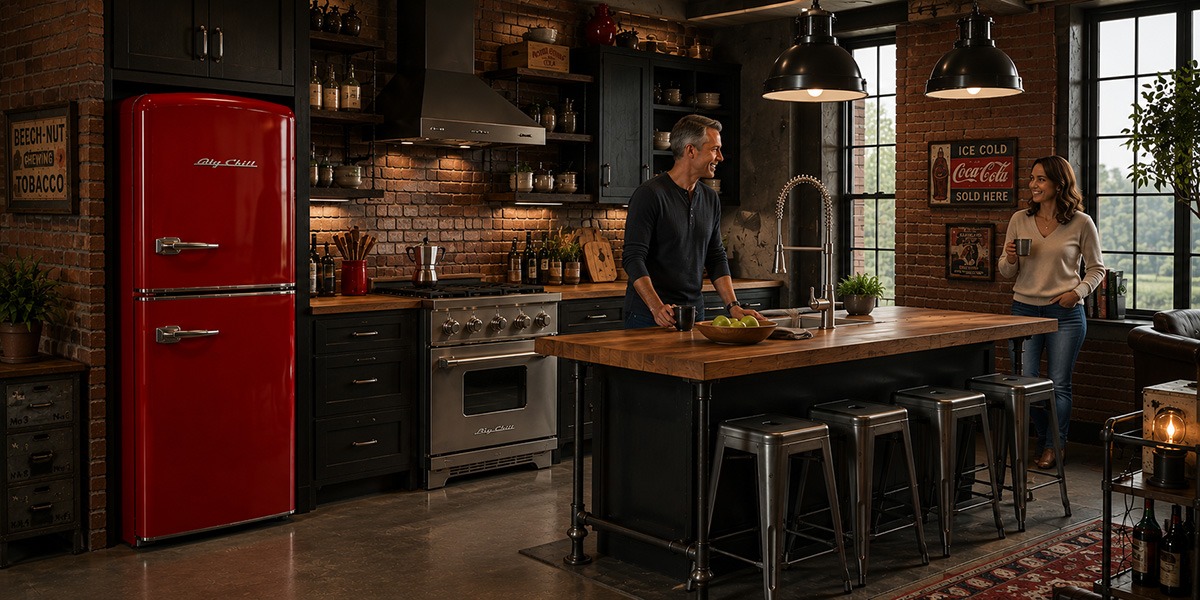
In an urban loft
A retro refrigerator can relieve the severity of exposed brick, steel, concrete, and dark cabinetry. Classic industrial styling can also reinforce the building’s history without making the kitchen feel old-fashioned.
In a cabin or mountain home
Rounded forms and colored finishes sit comfortably beside timber, stone, ironwork, and antiques. Retro styling complements the house’s warmth while providing modern functionality.
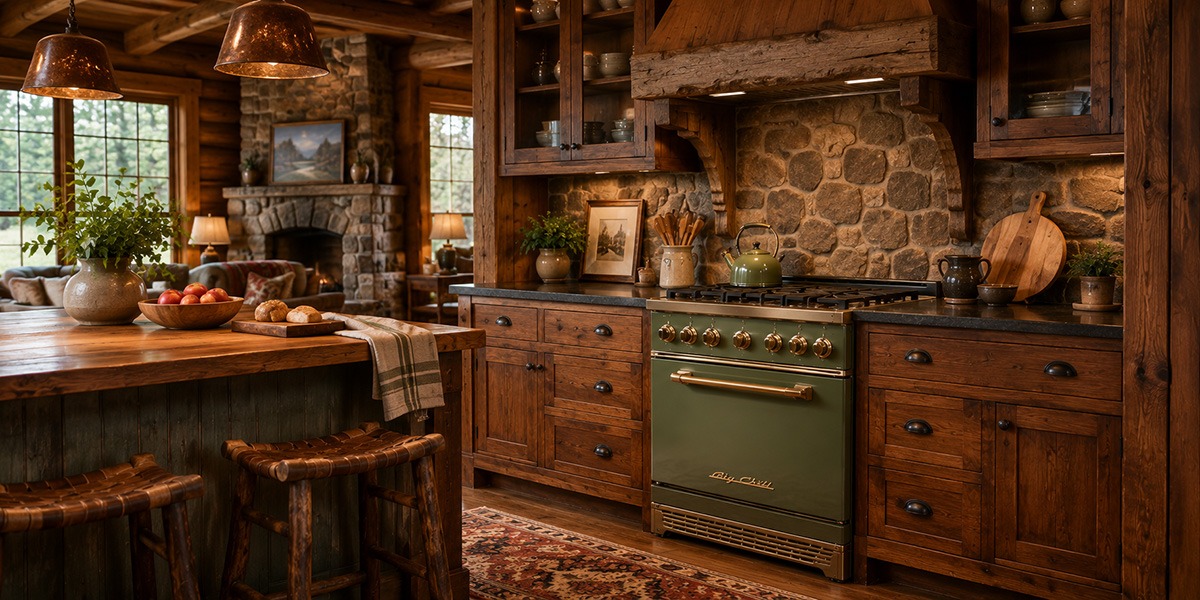
A single statement piece may be enough
Retro styling works best when it feels intentional.
Filling a kitchen with period colors, diner furniture, chrome-edged tables, vintage signs, patterned floors, and matching accessories can make the room feel staged. That may suit a commercial space or a homeowner who wants a full period treatment, but it is not necessary.
Many of the strongest retro kitchens use only one or two prominent elements.
A colorful Big Chill refrigerator can become the focal point while the cabinets remain neutral. A range and hood can anchor the cooking area without dictating the rest of the furnishings.
Designers consulted by Homes & Gardens recommended
- balancing retro appliances with cleaner cabinetry, natural stone, warm wood, and restrained supporting details, and
- advised using muted colors so appliances feel integrated rather than theatrical.
The goal is not to make every object match. It is to make the room feel connected.
Repeating an appliance color in a backsplash, fabric, artwork, or cabinet interior can create that connection. Matching the appliance trim to faucets, cabinet hardware, or lighting can also make the selection feel deliberate.
Retro style reflects a larger change in home design
The return of retro design is not simply a revival of 1950s colors or antique-looking appliances. It reflects a broader change in what people expect from their homes.
- They want rooms that feel comfortable rather than clinical.
- They want spaces that reveal something about the people who live there.
- They are more willing to mix old and new, combine periods, use color, and select furnishings based on personal attachment rather than resale formulas.
Recent design reporting has described this as nostalgia décor, grandmacore, modern heritage, and refined layering. The labels differ, but the underlying idea remains similar: new homes do not need to contain only new-looking things.
Retro-inspired design meets that demand without requiring homeowners to give up modern convenience.
It allows a kitchen to look familiar without being outdated. It introduces character without sacrificing function. It can respect the history of an older house or add contrast to a new one.
Most importantly, it gives homeowners more choices.
Design a kitchen that feels like your home
Kitchen Obsession represents Big Chill appliances because their Retro, Classic, and Pro collections offer alternatives to the standard appliance wall. The collections range from overtly 1950s-inspired designs to industrial and contemporary forms, making them suitable for a wide range of architectural and interior styles.
Bibliography
Homes & Gardens, “Are Retro Appliances Finally Going Out of Style?”
Houzz, “2025 U.S. Houzz Fall Design Trends Report”
Houzz, “10 Kitchen Remodeling Trends to Know for 2026”
Houzz, “Revel in Retro With Vintage and New Kitchen Appliances”
Good Housekeeping, “Design Experts Explain Why Off-White Appliances Are Trending Again”
Good Housekeeping, “What Designers Think of the Nostalgia Decor Trend”
Good Housekeeping, “Designers Predict Refined Layering Will Trend in 2026”
Kitchen Obsession, Big Chill Retro Appliances
Kitchen Obsession, About Kitchen Obsession
